100 Feet Long equals exactly 1,200 inches, 33⅓ yards, or 30.48 meters. But those numbers alone can be surprisingly hard to picture. A much easier way to understand the distance is to imagine a little over ten typical 9-foot cars placed end to end, or a span stretching across a large outdoor space.
This measurement matters because “how long is 100 ft?” and “how long is 100 feet?” usually aren’t really questions about conversion. People want to know what that distance looks like in real life. It can also cause confusion when length and height get mixed up. For example, 100 feet tall is roughly comparable to the height of a 10-story building, while 100 feet long describes a horizontal distance.
Here, you’ll see 100 feet compared with familiar objects, vehicles, sports spaces, buildings, and natural examples so the measurement finally feels tangible. You’ll also discover how far 100 feet is in meters, yards, and inches, plus some surprisingly useful ways to estimate the distance without a measuring tape. And if you’re exploring everyday measurements, our guide to [How Long Is 50 Feet?] makes a useful next comparison.
Quick Overview: How Long Is 100 Feet?
| Measurement | Equivalent |
|---|---|
| 100 feet | 30.48 meters |
| 100 feet | 33.33 yards |
| 100 feet | 1,200 inches |
| 100 feet | 0.0189 miles |
| 100 feet | 0.3048 hectometers |
| 100 feet | 10,000 centimeters |
In simple terms: 100 feet is about the length of 10 average cars parked end to end. It is also roughly the distance across a small sports court or a little more than the length of an Olympic swimming pool.
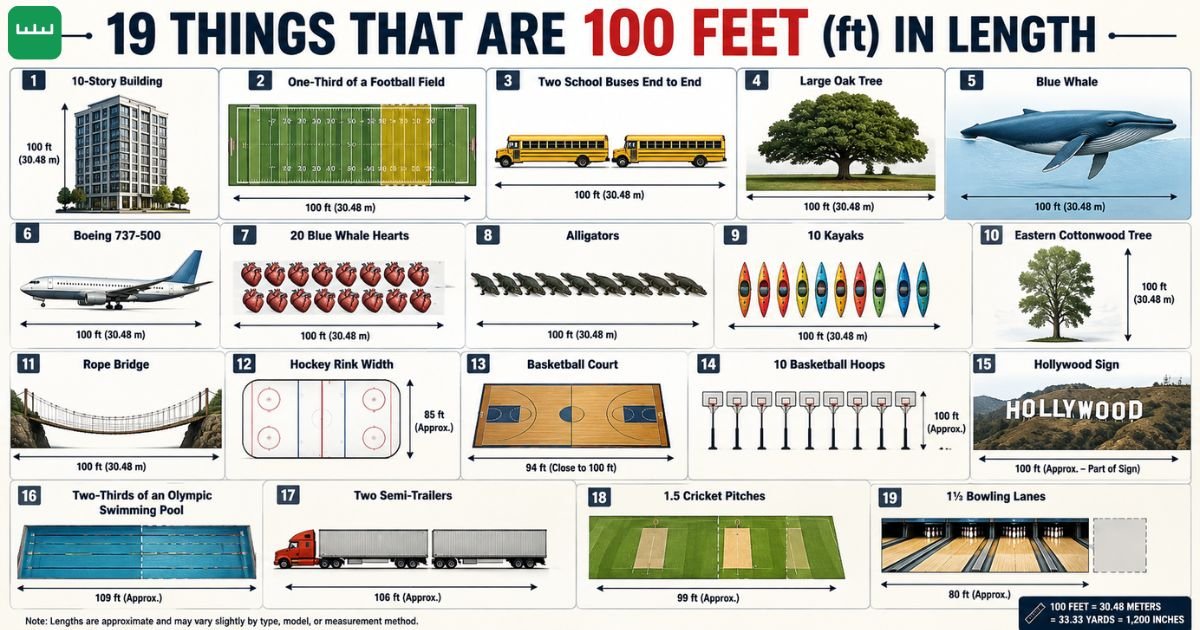
15 Things That Are 100 Feet (ft) In Length
From everyday vehicles to familiar structures, these real-world examples make 100 feet in length much easier to picture. Let’s see how these objects compare in size and discover which ones come surprisingly close to 100 feet long.
1. 10-Story Building

A typical 10-story building can give you a useful visual sense of 100 feet in length, although building height varies by design. If each floor averages around 10 feet from floor to floor, ten levels can reach roughly 100 feet. That makes this comparison especially useful when someone asks, “How tall is 100 feet?” rather than how long is 100 feet.
Picture standing at the base of a mid-rise building and looking upward. Ten floors can make 100 feet feel much more substantial than the number suggests. The exact height changes with ceiling heights, structural floors, and mechanical spaces, so a 10-story building is best treated as a visual approximation rather than an exact measuring stick.
This comparison works because most people have seen a 10-story building before. You do not need a tape measure to imagine the scale. Just picture ten levels stacked above you, and you have a quick mental reference for what roughly 100 feet looks like.
2. One-Third of a Football Field
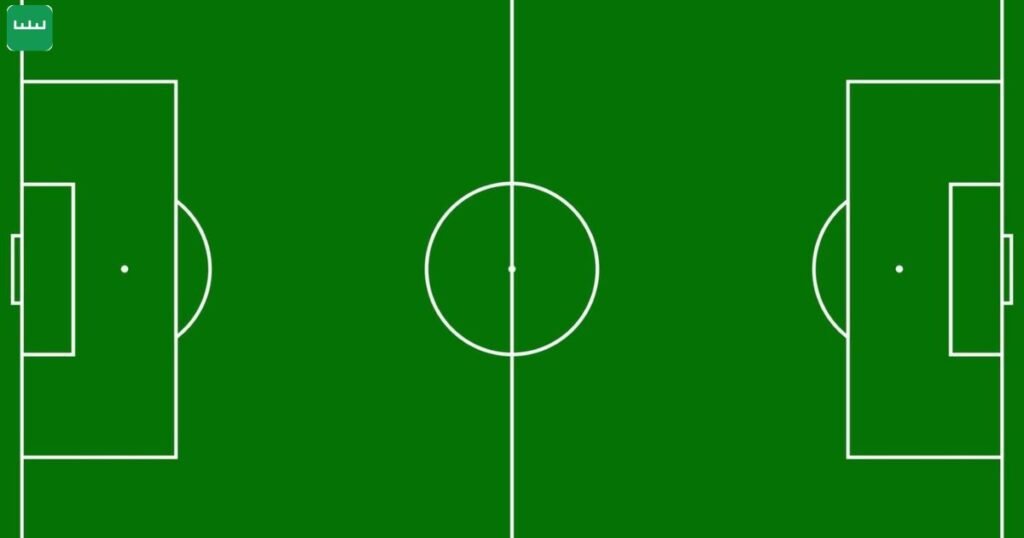
One-third of an American football field is a surprisingly close way to picture 100 feet. A regulation football field measures 120 yards, or 360 feet, from end zone to end zone. One-third of that total is exactly 120 feet, so it is about 20 feet longer than 100 feet.
Imagine standing on one end of the playing field and walking toward the opposite end. After covering roughly the first third, you have traveled a little farther than 100 feet. The comparison becomes even easier because the field’s yard markings divide the distance into familiar sections.
This is useful because football fields are common visual references. If you can picture one-third of a football field, you can immediately understand that 100 feet long is substantial but nowhere near the full length of the field.
3. Two School Buses End to End

Two full-size school buses parked nose to tail can come surprisingly close to 100 feet. A typical school bus is roughly 35 to 45 feet long depending on its design, so two larger buses can approach or reach the 80 to 90-foot range, while some configurations can come closer to 100 feet.
Picture two yellow school buses lined up bumper to bumper on a straight road. The combined length gives you a much better sense of distance than simply hearing “100 feet.” The surprising part is that bus size varies considerably, so two buses should be treated as an approximate comparison rather than a fixed 100-foot measurement.
The benefit is simple: most people know how long a school bus looks in real life. Put two of them together and you get an immediate mental picture of a distance approaching 100 feet without needing a measuring tool.
4. Large Oak Tree

A large mature oak tree can reach around 80 to 100 feet in height, with exceptional specimens growing even taller. That makes a big oak a useful way to understand 100 feet, particularly when thinking about height rather than horizontal length.
Imagine standing beside a mature oak and looking toward its highest branches. A tree approaching 100 feet would tower over nearby houses and many smaller trees. Its canopy can also spread widely, creating another visual reminder of just how much space a mature tree can occupy.
This comparison is helpful because trees are easy to recognize. If you have seen a very tall oak in a park or woodland, you already have a natural reference point for roughly 100 feet without having to estimate every foot yourself.
5. Blue Whale

A blue whale is an impressive comparison because the largest individuals can approach or exceed 100 feet in length. Unlike many examples on this list, this one represents a genuinely long horizontal distance rather than height.
Imagine a blue whale stretched along the ground from its head to its tail. A whale near 100 feet long would be longer than many city buses and would take up a remarkable amount of space. Blue whales are also the largest animals known to have lived, which makes their size especially useful for visualizing a distance this large. Scientific research places blue whale body size at an extraordinary scale compared with other mammals.
The comparison works because the whale’s entire body gives you one continuous 100-foot reference. Instead of imagining 1,200 inches separately, picture one enormous animal extending from one end to the other.
6. Boeing 737-500

The Boeing 737-500 is a useful aviation comparison, but it is shorter than 100 feet. Its fuselage length is about 101 feet, making it one of the better aircraft examples for visualizing the distance.
Imagine a Boeing 737-500 parked at an airport gate. From its nose to its tail, the aircraft stretches about 100 feet, giving you an unusually clear real-world reference for the measurement. The airplane’s wings make its overall footprint much wider, but its nose-to-tail length is what matters here.
This comparison is especially helpful because aircraft are familiar objects with a clearly defined front and rear. If you have ever walked alongside a commercial jet, imagining that distance from nose to tail makes 100 feet much easier to grasp.
7. 20 Blue Whale Hearts
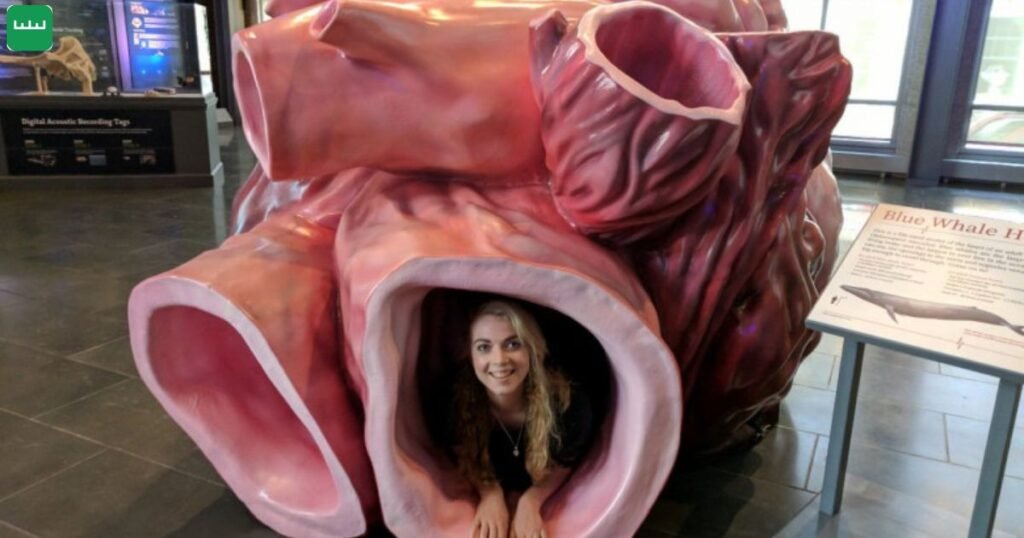
Twenty blue whale hearts placed end to end would provide an unusual but memorable way to visualize 100 feet. A blue whale’s heart is roughly 5 feet long, so 20 hearts would total approximately 100 feet. The comparison is theoretical, of course, because these hearts would never be arranged this way in nature.
The surprising part is the size of a blue whale’s heart itself. It can measure around 5 feet in length and weigh hundreds of pounds. Claims that the heart is literally the size of a Volkswagen Beetle are often exaggerated; its actual dimensions are closer to a very large, compact object than a whole car.
This comparison is useful because multiplying one familiar dimension makes a huge distance easier to imagine. One five-foot heart is already enormous. Twenty placed in a straight line would suddenly turn that unusual fact into a 100-foot scale.
8. Alligators
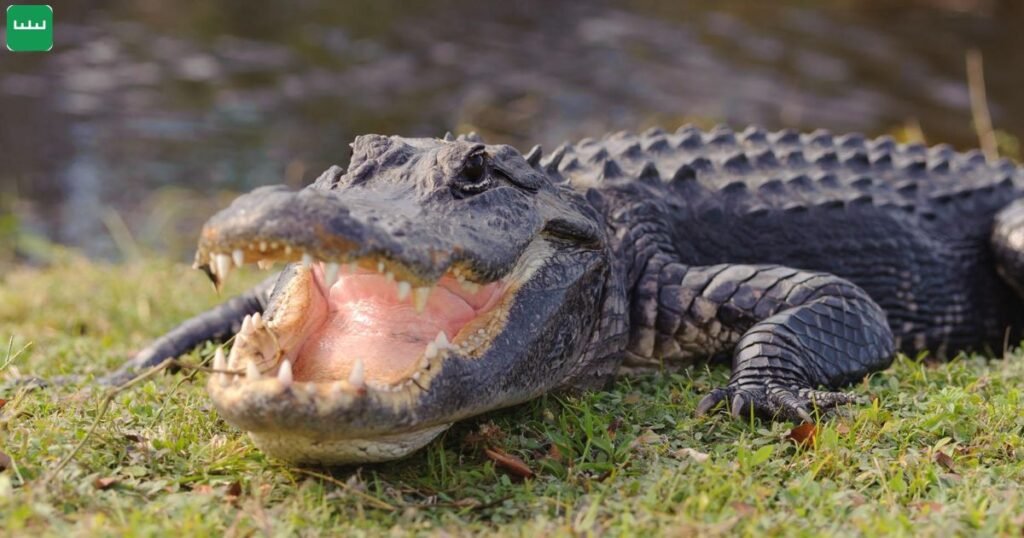
A group of ten 10-foot alligators lined up head to tail would stretch about 100 feet. Large American alligators can reach around this length, although most wild alligators are considerably shorter. A recent Texas sighting, for example, involved an adult alligator estimated at about 10 feet long.
Picture ten large alligators arranged in a perfectly straight line. Each animal contributes roughly 10 feet, so the combined distance reaches about 100 feet. The mental image is striking because one 10-foot alligator already looks enormous when compared with a person.
This gives you a practical multiplication trick. Instead of trying to imagine 100 feet at once, picture one 10-foot animal and mentally repeat it ten times. You can use the same method with other objects without needing a measuring tape.
9. 10 Kayaks
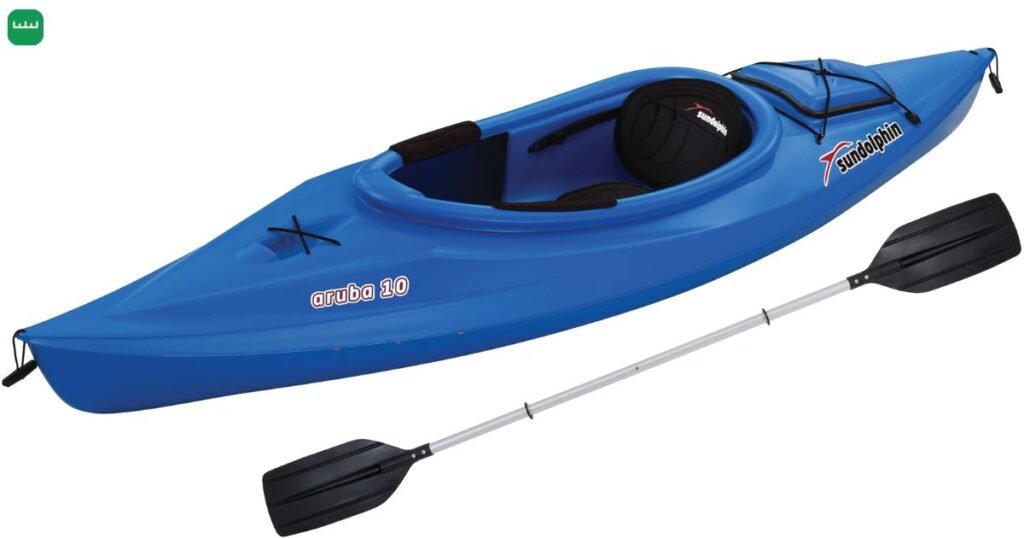
Ten recreational kayaks placed end to end can provide a useful approximation of 100 feet. Many recreational and touring kayaks fall around 9 to 12 feet long, so ten of them could span roughly 90 to 120 feet depending on the model.
Imagine a row of kayaks lined up along a beach, dock, or grassy shoreline. If each kayak averages about 10 feet, the tenth kayak would bring the total close to 100 feet. The exact figure depends on the kayak type, so this is best understood as a visualization rather than a precise conversion.
The advantage is that a kayak is long and narrow, making the end-to-end comparison easy to picture. Ten similar kayaks give you a simple mental shortcut for understanding how far 100 feet really is.
10. Eastern Cottonwood Tree

A mature eastern cottonwood can grow to roughly 100 feet or more in height, making it a strong natural comparison for understanding a 100-foot vertical distance. These trees are among the taller broadleaf trees commonly found across parts of North America.
Picture an enormous cottonwood rising above a riverside landscape. Its trunk can climb dramatically upward before the branches spread into a broad crown. Unlike a small garden tree, a mature cottonwood can make a 100-foot height feel surprisingly realistic.
This comparison helps because you can see trees from a distance and judge their scale naturally. If you imagine a cottonwood reaching about 100 feet into the sky, you get a much stronger sense of the measurement than you would from a bare number.
11. Rope Bridge

A small rope bridge can be designed at around 100 feet in length, although its actual size depends entirely on the location and construction. Unlike a basketball court or cricket pitch, there is no universal standard that makes every rope bridge exactly 100 feet long.
Imagine crossing a suspended bridge stretched between two points in a forest or adventure park. Looking back after walking halfway across would give you a strong sense of how far 100 feet extends. The bridge’s movement and elevation can make the distance feel even greater.
The useful part of this comparison is the walking experience. If you can imagine crossing a rope bridge for about 100 feet, you can understand the distance through movement rather than numbers alone.
12. Hockey Rink Width

The width of an NHL hockey rink is 85 feet, so it is 15 feet shorter than 100 feet. That makes the width a close and familiar comparison, but it should not be described as an exact 100-foot measurement.
Picture standing behind one goal and looking across the entire width of the ice. The 85-foot span is already surprisingly broad. Add another 15 feet mentally, and you have the equivalent of 100 feet. International hockey surfaces can be wider, so rink dimensions vary by governing standard.
This comparison is useful because hockey rinks provide a large, clearly marked space. If you have watched a game or visited an ice rink, imagining the rink width plus another short distance makes how long is 100 feet easier to answer.
13. Basketball Court

An NBA basketball court is 94 feet long, making it only 6 feet shorter than 100 feet. That makes a full basketball court one of the strongest visual comparisons on this list. The official NBA and men’s NCAA court length is 94 feet, or about 28.65 meters.
Imagine standing at one baseline and looking all the way to the opposite baseline. You are looking across almost the entire 100-foot distance already. Add roughly two average adult strides beyond the court’s length, and you are close to 100 feet.
This is especially useful because basketball courts have fixed boundaries that make distance easy to see. When someone asks how long 100 feet is, simply imagining a regulation basketball court plus a small extra section provides a remarkably practical answer.
14. 10 Basketball Hoops

Ten basketball hoops stacked vertically would represent about 100 feet because a regulation basketball rim is 10 feet above the floor. This is a height comparison, not a horizontal length, so it helps answer “how tall is 100 feet” rather than literally measuring something 100 feet long.
Imagine ten regulation basketball rims positioned one above another. The first rim would be 10 feet high, the second 20 feet, and so on until the tenth reaches the 100-foot mark. Of course, real basketball hoops are not stacked this way, so this is a mental scale rather than a practical construction.
The benefit is that the 10-foot rim height is extremely familiar to basketball fans. Multiplying a known measurement by ten turns an abstract 100-foot height into something much easier to visualize.
15. Hollywood Sign

The Hollywood Sign is not a 100-foot-long object, so it should be used carefully. The full sign stretches roughly 350 feet across the hillside, meaning 100 feet is only a little under one-third of its total width.
Imagine looking at the Hollywood Sign from a viewpoint in Los Angeles. Instead of picturing the entire sign as 100 feet, imagine dividing its overall width into roughly three sections. One of those sections gives you a visual scale close to 100 feet.
This comparison is useful because the sign is instantly recognizable. It helps people understand that 100 feet is substantial, but it is nowhere near the entire width of one of Los Angeles’s most famous landmarks. That distinction prevents a common measurement mistake.
16. Two-Thirds of an Olympic Swimming Pool
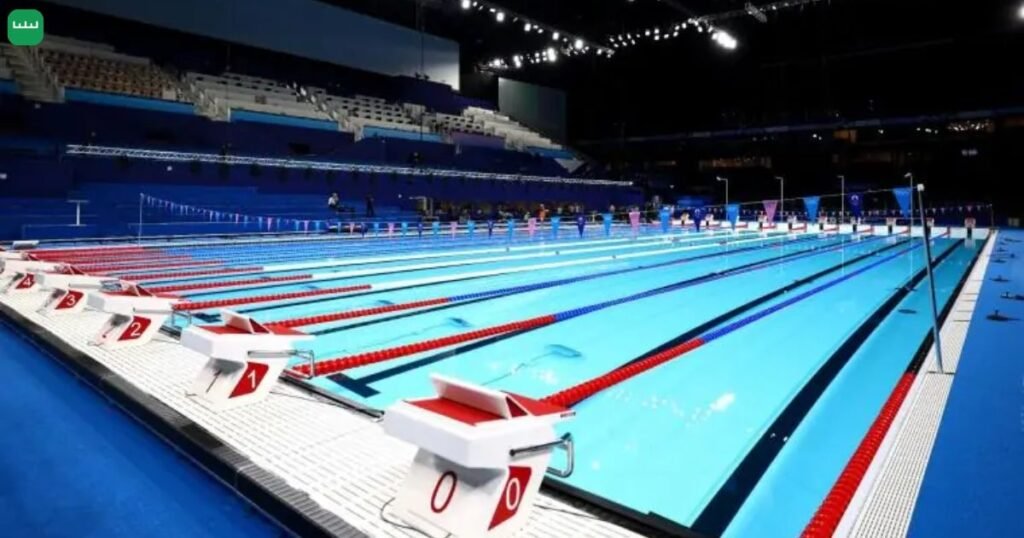
A standard long-course Olympic swimming pool is 50 meters long, which equals about 164 feet. Two-thirds of that distance is approximately 109 feet, so it is close to 100 feet but not exact.
Imagine standing at one end of an Olympic pool and mentally dividing its length into three equal sections. Two of those sections would cover about 109 feet. To reach exactly 100 feet, you would stop slightly before the two-thirds point.
This is a useful visual because Olympic pools have a fixed, familiar length. If you know what a 50-meter pool looks like, you can mentally shorten it to roughly 100 feet and get a realistic sense of the distance.
17. Two Semi-Trailers
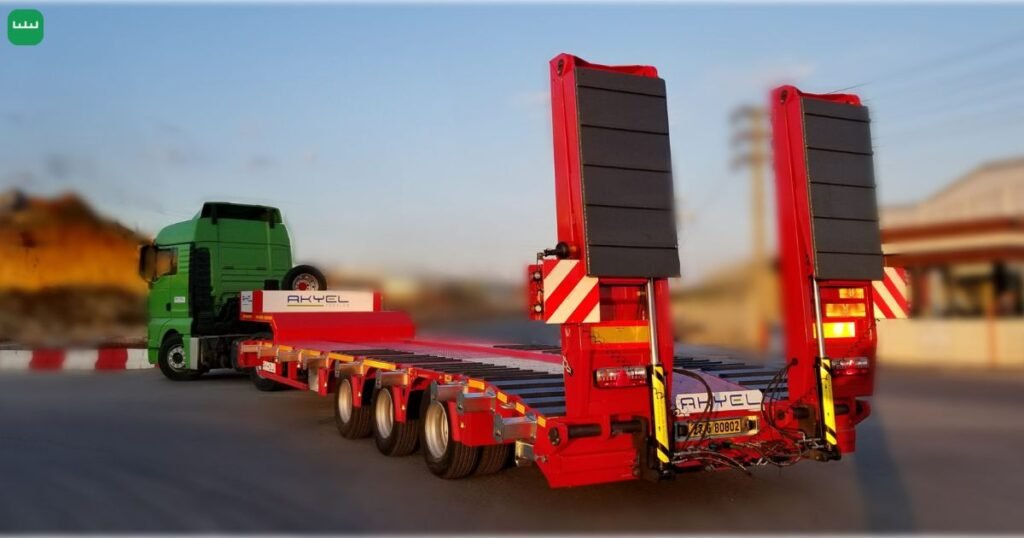
Two standard 53-foot semi-trailers placed end to end would total about 106 feet. That makes them a very close comparison to 100 feet, although the combined length is roughly 6 feet longer than the target distance.
Picture two large freight trailers lined up nose to tail on a straight road. The first trailer covers 53 feet, and the second adds another 53 feet. Together, they stretch just beyond 100 feet, giving you a strong real-world reference for the distance.
This comparison is practical because semi-trailers are among the longest everyday vehicles people regularly see on highways. Two of them provide an immediate mental picture without requiring you to measure the road.
18. 1.5 Cricket Pitches
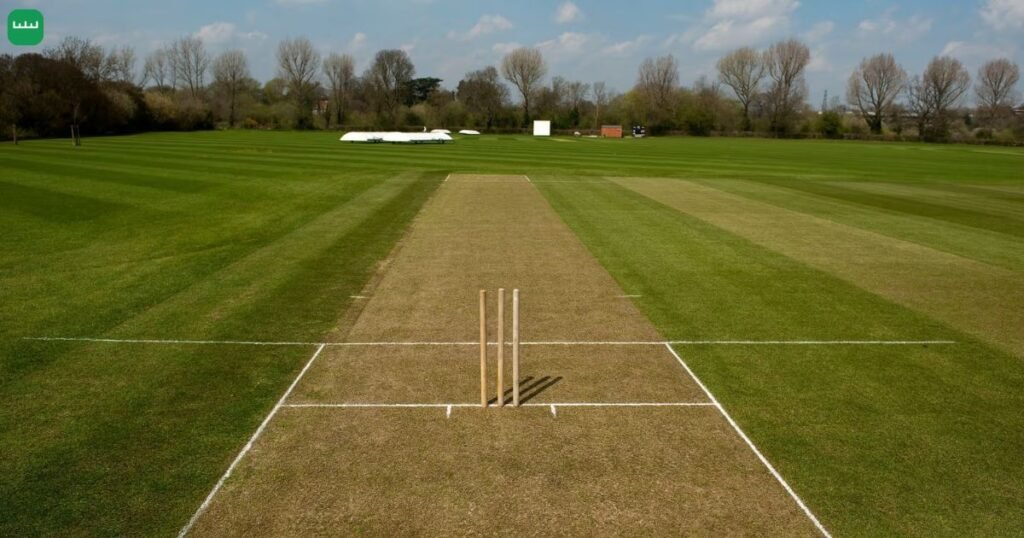
One standard cricket pitch measures 22 yards, which equals 66 feet. One and a half cricket pitches therefore measure exactly 99 feet. That makes this one of the closest comparisons to 100 feet on the list, falling short by only 1 foot.
Picture one cricket pitch stretching from wicket to wicket, then add half of another pitch. The total distance would be 99 feet. In practical terms, that is almost indistinguishable from 100 feet when you are simply estimating distance outdoors.
This is an excellent mental shortcut for cricket fans. Rather than imagining 100 individual feet, picture one full 22-yard pitch plus half of another. You are already within 1% of the target.
Conclusion
Seeing 100 feet long through familiar things makes the distance much easier to grasp than a number alone. A basketball court is just short of it, two 53-foot trailers stretch slightly beyond it, and 1.5 cricket pitches come within just 1 foot. Once you start thinking in buses, courts, trees, and vehicles, how long is 100 ft? stops being an abstract question. The next time you see a 100-foot space, you may realize it is not just a measurement on a tape—it is a distance you can actually picture, walk, and compare.
I’ve shared the most useful real-life comparisons to help you understand measurements more easily. Bookmark this website for future guides covering feet, inches, meters, conversions, and everyday size references.

I’m a measurement and size guide writer focused on making everyday measurements simple and easy to visualize. I share practical comparisons, conversions, and real-world examples to help readers understand size with confidence. My goal is to turn confusing numbers into clear, useful information you can apply in everyday life.